
University of Nairobi Staff, Partners Collaborate in Annual Tree Growing Initiative at Upper Kabete
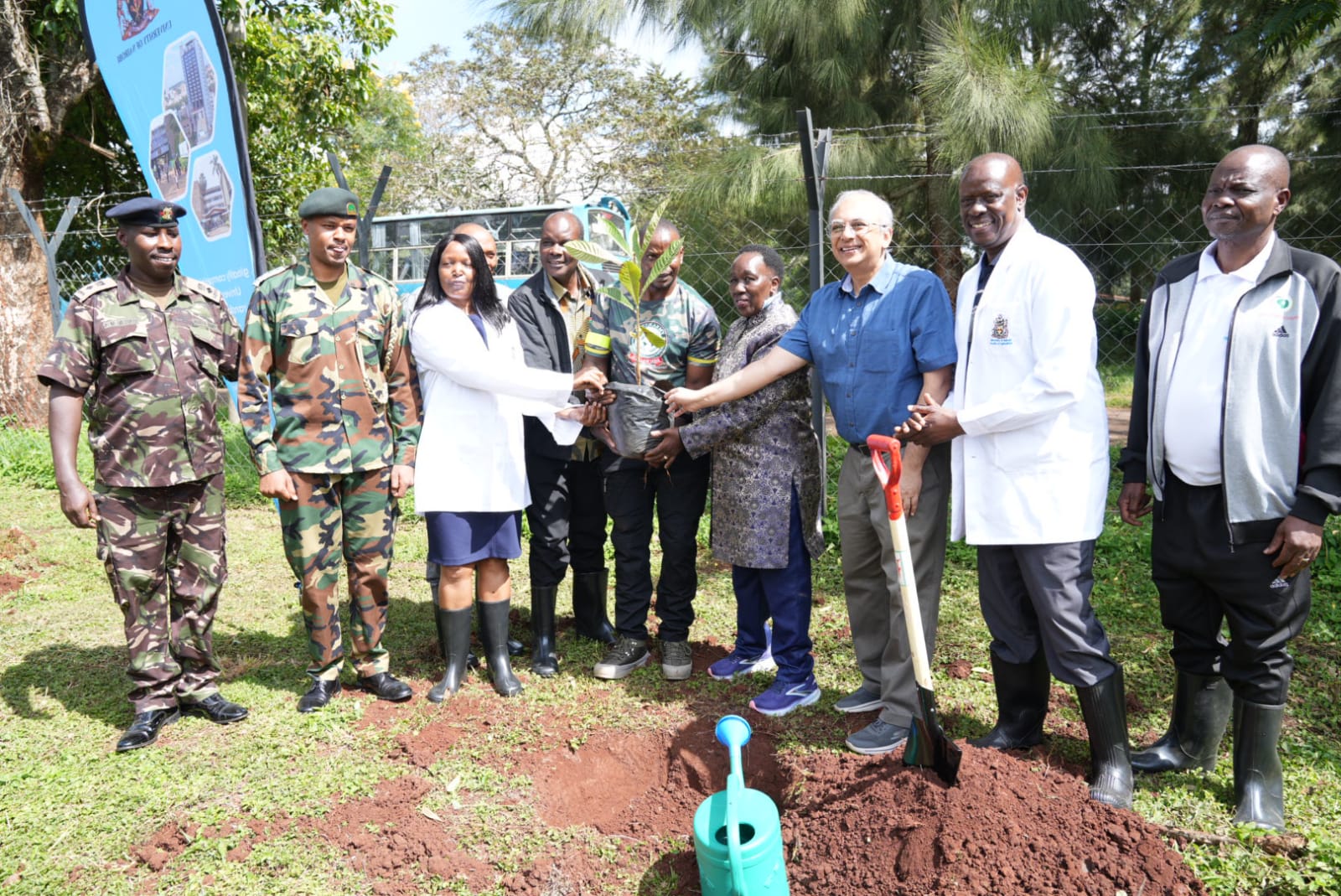
In a strong show of the link between environmental conservation and academic duty, staff from the University of Nairobi partnered with national stakeholders during the institution’s Annual Tree Planting and Growing Initiative held on Thursday, April 2, at the Upper Kabete Campus.
The exercise, presided over by Vice-Chancellor Prof. Margaret Jesang Hutchinson, brought together staff, students, and key environmental actors in a coordinated effort to promote climate resilience, protect biodiversity, and restore degraded landscapes. The day’s activities began at the Kantaria Agricultural Technology & Innovation Centre (KATIC), where participants received practical guidance on selecting suitable tree species, correct planting procedures, and essential aftercare practices aimed at improving survival rates and supporting long-term ecological recovery.
This year’s initiative benefited from enhanced collaboration with strategic partners, including Safaricom PLC, the National Commission for Science, Technology and Innovation, the Kenya Defence Forces, the Kenya Forest Service, and the National Research Fund. Together, these partners contributed 10,500 seedlings comprising both avocado and indigenous tree varieties to advance the University’s greening agenda.
As part of its sustainability commitments, the University has set a target of planting 130,000 trees annually, contributing to Kenya’s broader ambition of growing 15 billion trees. Representatives from the Kenya Forest Service emphasized that the success of such initiatives should be assessed based on tree survival, diversity of species, and the capacity of the trees to restore critical ecosystem functions such as soil conservation, water retention, and habitat restoration.
Reinforcing this focus, officials from the National Commission for Science, Technology and Innovation highlighted that their collaboration with the University since 2022 has achieved survival rates exceeding 80 percent. Speaking at the event, Cyprian Kareithi noted that more than 10,000 seedlings have been planted through the partnership, with improved outcomes driven by structured training, consistent monitoring, and sustained post-planting care. He further observed that the partnership has strengthened research in areas such as ecosystem restoration, climate adaptation, and biodiversity conservation, contributing to informed environmental management practices.
Similarly, representatives from the National Research Fund stressed that restoring ecosystems is a collective responsibility involving academic institutions, government bodies, and local communities. They noted that joint initiatives like the tree growing programme not only promote sustainability but also create avenues for research, innovation, and the scaling up of effective land restoration solutions.
From the Kenya Defence Forces, Lt. Mutuku underscored the importance of discipline and follow-through in ensuring high tree survival rates. He pointed out that planting must be accompanied by protection measures, regular maintenance, and monitoring to ensure the trees reach maturity and deliver lasting environmental benefits.
In her remarks, Prof. Hutchinson highlighted the critical role of healthy ecosystems in achieving sustainable development, noting that environmental degradation directly threatens food security, biodiversity, and livelihoods. She emphasized that the University is intentionally building partnerships that integrate teaching, research, and community engagement in its restoration efforts.
“Every tree planted today contributes to a more resilient and sustainable future. This is not just about planting trees it is about securing a greener tomorrow together,” she said. “We are working closely with strategic partners to enhance food security and ensure environmental sustainability remains a key priority. It is difficult to fully realize our rights in the absence of a healthy ecosystem.”
She further noted that well-functioning ecosystems support agriculture, regulate climate systems, safeguard water resources, and sustain biodiversity, adding that universities have a responsibility to lead in knowledge creation and model sustainable practices.
At KATIC, Bimal Kantaria spoke about ongoing and future initiatives, including the integration of artificial intelligence in agriculture to advance climate-smart farming. He emphasized that technological innovation should be aligned with environmental conservation to ensure the protection of soil health, water systems, and biodiversity.
“Today’s initiative reflects our shared commitment to environmental stewardship. Achieving sustainability requires partnerships, accountability, and a long-term outlook. The time to act is now,” he said.
Participants planted both fruit-bearing and indigenous tree species across designated areas, with a strong emphasis on continued care, monitoring, and knowledge sharing to boost survival rates. The initiative highlights a shift from simply planting trees to nurturing them to maturity focusing on restoring ecological balance, enhancing biodiversity, and strengthening resilience to climate change.
- Log in to post comments


